
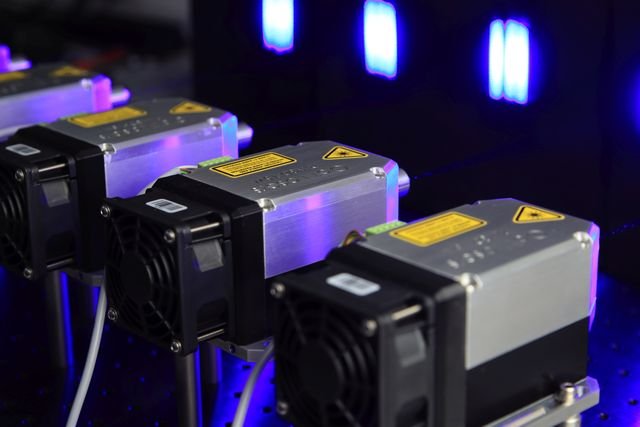
Industrial Laser Sensors Guide to Applications, Types and Selection
Modern industries rely heavily on precision, speed, and automation to remain competitive. Whether it’s manufacturing automotive components, inspecting electronic assemblies, packaging consumer goods, or managing warehouse automation, accurate measurement and reliable object detection have become essential. Traditional contact-based measurement methods are gradually giving way to advanced sensing technologies that deliver faster, more accurate, and non-contact solutions.
Laser sensor technology has emerged as one of the most significant innovations in industrial automation. By using focused laser beams to detect distance, position, thickness, height, and surface characteristics, these sensors provide exceptional measurement accuracy while minimizing wear and maintenance. Their ability to function without physically touching the target makes them ideal for fragile, hot, moving, or delicate materials.
As factories continue embracing Industry 4.0 and smart manufacturing, laser sensors are becoming an integral part of automated production lines. They help improve productivity, reduce defects, minimize waste, and ensure consistent product quality. Understanding how these sensors work and selecting the right one can significantly improve operational efficiency across numerous industries.
This comprehensive guide explains the working principles, applications, various types, advantages, limitations, and essential selection criteria for industrial laser sensors, helping businesses make informed purchasing decisions and optimize their automation systems.
Understanding Industrial Laser Sensors
Industrial Laser Sensors are advanced non-contact devices designed to measure distance, detect objects, inspect surfaces, determine position, and perform highly accurate dimensional measurements using laser technology. Unlike conventional proximity sensors that rely on electromagnetic fields or physical contact, laser sensors emit a focused beam of light toward a target. The reflected light is then analyzed to determine precise measurements with exceptional accuracy.
Because laser beams remain highly concentrated over long distances, these sensors deliver consistent performance even in challenging industrial environments. Manufacturers use them for applications requiring micron-level precision, rapid response times, and reliable measurements during continuous production.
Today’s industrial laser sensors can detect objects ranging from tiny electronic components to massive steel structures while maintaining impressive repeatability and accuracy.
How Industrial Laser Sensors Work
Laser sensors operate using different measurement principles depending on the intended application. Although the technologies vary, the basic operating process follows several steps:
Laser Emission
A semiconductor laser diode generates a narrow, focused beam of light directed toward the target object.
Reflection
The laser beam strikes the object’s surface and reflects back toward the sensor.
Signal Detection
An optical receiver captures the reflected beam and converts the optical signal into electrical information.
Data Processing
Internal electronics analyze the returned signal using specialized algorithms to calculate:
- Distance
- Position
- Height
- Thickness
- Diameter
- Presence or absence of an object
- Surface profile
The calculated information is transmitted to PLCs, industrial computers, robotic systems, or automation controllers.
Main Types of Industrial Laser Sensors
Selecting the appropriate laser sensor begins with understanding the available technologies.
1. Laser Distance Sensors
Distance sensors measure the gap between the sensor and a target with extremely high accuracy.
Typical applications include:
- Robotic positioning
- Height measurement
- Conveyor monitoring
- Material handling
- Automated storage systems
These sensors are widely used because they combine speed with excellent repeatability.
2. Laser Displacement Sensors
Displacement sensors measure extremely small changes in position.
They are commonly used for:
- Thickness measurement
- Flatness inspection
- Surface profile analysis
- Precision machining
- Semiconductor manufacturing
These sensors often achieve micron-level accuracy.
3. Laser Triangulation Sensors
Triangulation sensors determine distance by measuring the angle of reflected laser light.
Advantages include:
- High precision
- Fast measurement
- Ideal for short-range applications
- Excellent repeatability
Industries using triangulation sensors include:
- Electronics
- Medical devices
- Precision engineering
- Automotive manufacturing
4. Time-of-Flight (ToF) Laser Sensors
Time-of-flight sensors calculate distance by measuring the travel time of laser pulses.
Benefits include:
- Long measuring range
- Fast operation
- Large object detection
- Outdoor compatibility
These sensors are common in:
- Warehouse automation
- AGVs
- Logistics
- Construction equipment
5. Laser Profile Sensors
Profile sensors generate two-dimensional or three-dimensional profiles of objects.
Applications include:
- Weld inspection
- Surface scanning
- Shape analysis
- Volume measurement
- Edge detection
They play an important role in quality inspection systems.
6. Laser Barcode and Position Sensors
These sensors identify positions, markings, labels, and barcodes during production.
Industries include:
- Packaging
- Food processing
- Pharmaceutical manufacturing
- Distribution centers
Common Industrial Applications
Laser sensors have become indispensable across many industrial sectors.
Manufacturing
Manufacturers use laser sensors for:
- Position control
- Part alignment
- Robotic guidance
- Surface inspection
- Quality control
They improve production consistency while reducing manual intervention.
Automotive Industry
Automotive manufacturers rely on laser sensors for:
- Body panel alignment
- Weld inspection
- Paint thickness measurement
- Component positioning
- Assembly verification
Their precision supports automated assembly lines and ensures tight manufacturing tolerances.
Electronics Manufacturing
Miniature electronic components require extremely accurate positioning.
Laser sensors assist in:
- PCB inspection
- Component placement
- Chip manufacturing
- Micro-assembly
- Connector inspection
Even microscopic dimensional variations can be detected.
Packaging Industry
Packaging facilities use laser sensors for:
- Carton detection
- Label verification
- Bottle positioning
- Height measurement
- Fill level inspection
This improves production speed while minimizing packaging errors.
Metal Processing
Laser sensors help monitor:
- Sheet thickness
- Steel coil positioning
- Surface defects
- Tube diameter
- Edge alignment
Non-contact measurement prevents damage to hot or freshly machined materials.
Wood Industry
Woodworking companies use laser sensors to measure:
- Board thickness
- Cutting accuracy
- Material alignment
- Surface flatness
This reduces material waste and improves product quality.
Food and Beverage
Laser sensors support hygienic production by enabling non-contact inspection.
Applications include:
- Bottle inspection
- Package detection
- Product counting
- Conveyor positioning
Their contactless operation helps maintain food safety standards.
Logistics and Warehousing
Automated warehouses use laser sensors for:
- Pallet positioning
- AGV navigation
- Rack detection
- Parcel dimensioning
- Collision avoidance
These applications improve operational efficiency while reducing accidents.
Advantages of Industrial Laser Sensors
Industrial laser sensors provide several advantages compared to traditional sensing technologies.
Exceptional Accuracy
Many laser sensors offer micron-level precision, making them suitable for high-tolerance manufacturing.
Non-Contact Measurement
Since the sensor never physically touches the object, there is no mechanical wear or product damage.
Fast Response Time
Modern sensors can perform thousands of measurements every second.
This supports high-speed production lines.
Long Service Life
Without moving mechanical components, laser sensors typically require minimal maintenance.
High Repeatability
Repeated measurements remain highly consistent over long operating periods.
Compact Design
Many sensors fit into confined spaces within robotic cells and automated machinery.
Flexible Installation
Laser sensors can monitor targets from various angles and distances.
Reduced Production Errors
Accurate measurements minimize defective products and reduce material waste.
Limitations to Consider
Although highly capable, laser sensors have some practical limitations.
Surface Reflectivity
Highly reflective or transparent materials may require specialized sensors.
Dust and Contamination
Heavy dust accumulation can interfere with laser transmission.
Ambient Light
Strong sunlight or intense lighting conditions may affect some sensor models.
Cost
Laser sensors generally cost more than simple photoelectric sensors.
However, their improved accuracy often delivers long-term savings.
Factors to Consider When Selecting Industrial Laser Sensors
Choosing the correct laser sensor depends on the application’s technical requirements.
Measurement Range
Determine the minimum and maximum distance required.
Different sensors are optimized for short-, medium-, or long-range measurements.
Required Accuracy
Applications like semiconductor manufacturing require micron accuracy, while warehouse automation may only need millimeter precision.
Object Material
Consider whether the object is:
- Transparent
- Reflective
- Dark
- Rough
- Metallic
- Plastic
- Organic
Different materials reflect laser light differently.
Environmental Conditions
Evaluate:
- Dust
- Moisture
- Oil
- Temperature
- Vibration
- Chemical exposure
Industrial-grade sensors typically feature IP65, IP67, or higher protection ratings.
Response Speed
High-speed production lines require sensors capable of extremely fast measurement cycles.
Mounting Space
Compact machinery may require miniature laser sensors with limited installation space.
Communication Interface
Modern sensors support industrial communication protocols such as:
- IO-Link
- Ethernet/IP
- PROFINET
- EtherCAT
- Modbus
- RS-485
Compatibility with existing automation systems is essential.
Power Requirements
Verify supply voltage compatibility with existing control systems.
Maintenance Requirements
Choose sensors with:
- Automatic calibration
- Self-diagnostics
- Easy cleaning
- Replaceable protective windows
These features reduce downtime.
Comparing Laser Sensors with Other Sensor Technologies
| Feature | Laser Sensors | Ultrasonic Sensors | Inductive Sensors | Capacitive Sensors |
| Accuracy | Excellent | Moderate | High | Moderate |
| Non-contact | Yes | Yes | Yes | Yes |
| Long Distance | Excellent | Good | Limited | Limited |
| Small Object Detection | Excellent | Fair | Good | Fair |
| Speed | Very High | Moderate | High | Moderate |
| Precision | Micron Level | Millimeter Level | High | Moderate |
Laser sensors often provide the best balance between speed and precision.
Maintenance Best Practices
Proper maintenance extends sensor life and ensures measurement reliability.
Recommended practices include:
- Clean optical lenses regularly.
- Inspect mounting hardware for looseness.
- Protect sensors from excessive contamination.
- Verify calibration periodically.
- Monitor signal quality using diagnostic software.
- Replace damaged protective windows immediately.
- Follow manufacturer maintenance schedules.
Preventive maintenance significantly reduces unexpected downtime.
Emerging Trends in Industrial Laser Sensor Technology
Laser sensor technology continues to evolve alongside industrial automation.
Some notable developments include:
AI-Assisted Inspection
Artificial intelligence is enhancing defect recognition and measurement analysis.
Industry 4.0 Connectivity
Modern sensors integrate seamlessly with cloud platforms and Industrial Internet of Things (IIoT) systems.
Higher Resolution
New sensors provide improved measurement precision for advanced manufacturing.
Miniaturization
Compact designs enable installation in increasingly smaller equipment.
Smart Diagnostics
Sensors now include predictive maintenance capabilities that alert operators before failures occur.
Multi-Function Devices
Some advanced sensors combine distance measurement, profile scanning, and inspection functions within a single device.
Industries Benefiting from Laser Sensor Technology
Industrial laser sensors continue transforming operations across numerous sectors, including:
- Aerospace
- Automotive
- Electronics
- Medical device manufacturing
- Packaging
- Food processing
- Logistics
- Warehouse automation
- Metal fabrication
- Pharmaceutical manufacturing
- Renewable energy
- Robotics
- Textile manufacturing
- Glass production
- Semiconductor fabrication
As automation expands, adoption is expected to accelerate further.
Conclusion
Industrial laser sensors have become indispensable tools in today’s automated manufacturing environments. Their ability to deliver highly accurate, non-contact measurements helps industries improve productivity, reduce waste, enhance quality control, and streamline complex production processes. From automotive assembly lines and electronics manufacturing to logistics, packaging, and metal processing, these advanced sensing solutions support a wide variety of precision-driven applications.
When selecting an industrial laser sensor, businesses should carefully evaluate factors such as measurement range, accuracy requirements, target material, environmental conditions, communication protocols, and installation constraints. Matching the right sensor to the application ensures reliable performance and maximizes return on investment.
As Industry 4.0, robotics, and intelligent manufacturing continue to evolve, industrial laser sensors will play an even greater role in enabling smarter, faster, and more efficient production systems. Investing in the right laser sensing technology today can help organizations stay competitive, improve operational efficiency, and meet the growing demands of modern industrial automation.
About Post Author
