
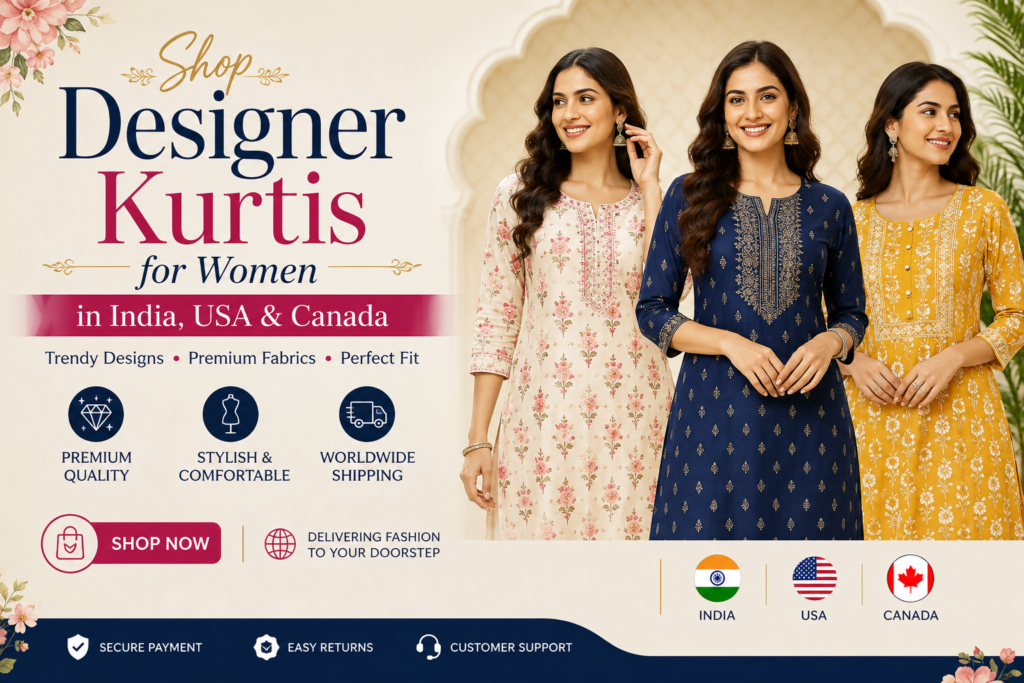
Designer Kurti for Women: Types, Designs, Fabrics and Buying Guide
Designer kurtis have become one of the most versatile choices in modern Indian fashion. They bring together traditional craftsmanship and contemporary styling, making them suitable for everyday wear, office outfits, festive celebrations, family gatherings, and special occasions. Unlike basic kurtis, designer styles often feature distinctive cuts, detailed embroidery, attractive prints, rich fabrics, and thoughtful silhouettes that make an outfit look polished without being overly complicated.
The popularity of the kurti comes from its flexibility. A single piece can be styled with palazzos, leggings, straight pants, skirts, jeans, or even worn as a dress, depending on its length and design. This makes kurtis especially appealing to women who want clothing that is comfortable while still reflecting their personal style. With countless designs available today, choosing the right one can sometimes feel overwhelming.
From heavily embroidered festive kurtis to simple cotton styles for daily use, there is something for almost every wardrobe. Designers and fashion brands continue to experiment with necklines, sleeves, hemlines, fabrics, colors, and embellishments. As a result, women can find styles that suit different body shapes, age groups, occasions, and budgets. Understanding the main types and features can make the shopping process much easier.
A good designer kurti is not simply about an attractive appearance. The fabric, stitching, fit, comfort, color, detailing, and occasion all matter. A beautiful kurti that feels uncomfortable or does not fit properly may remain unused in the wardrobe. Similarly, an expensive piece may not be the best purchase if its design does not suit your lifestyle. Before you decide to Shop Designer Kurti for Women, it is worth considering how, where, and when you plan to wear it.
What Is a Designer Kurti?
A designer kurti is a more detailed and fashion-focused version of the traditional Indian kurta. It may include distinctive silhouettes, decorative work, unusual cuts, premium fabrics, artistic prints, or contemporary styling elements. Designer kurtis can range from understated pieces with delicate detailing to elaborate outfits featuring embroidery, sequins, mirror work, beads, zari, or handcrafted embellishments.
One of their biggest advantages is versatility. A sophisticated kurti can be paired with trousers and heels for an office-inspired look, while the same style can be accessorized with traditional jewelry for a festive event. Short kurtis can also work beautifully with denim for a casual Indo-Western appearance.
Popular Types of Designer Kurtis
1. Anarkali Kurti
Anarkali kurtis are recognized for their fitted upper section and flared lower portion. They create a graceful, flowing silhouette and are often chosen for weddings, festivals, parties, and other celebrations.
Anarkali designs can be simple or highly embellished. Cotton versions are comfortable for casual occasions, while silk, georgette, chiffon, and embellished fabrics are more appropriate for formal events. Pairing an Anarkali with churidar pants and traditional earrings creates a classic look.
2. Straight-Cut Kurti
Straight-cut kurtis have a clean and structured silhouette. They are among the most practical choices for office wear, college, shopping, and everyday activities.
They work well with straight pants, leggings, cigarette pants, and palazzos. Minimal embroidery, geometric prints, subtle colors, and neat necklines can make a straight-cut kurti particularly suitable for professional settings.
3. A-Line Kurti
An A-line kurti gradually widens from the upper body toward the hem, creating an A-shaped silhouette. It offers a comfortable fit while maintaining an elegant appearance.
This style is available in both short and long versions. Printed A-line kurtis are excellent for everyday wear, whereas embellished versions can be styled for semi-formal occasions.
4. High-Low Kurti
High-low kurtis feature an uneven hemline, with the front or sides generally shorter than the back. The design gives a contemporary touch to traditional clothing.
They are particularly useful for women who enjoy Indo-Western fashion. Pairing a high-low kurti with fitted trousers or leggings can create a modern outfit without losing its Indian character.
5. Asymmetrical Kurti
Asymmetrical kurtis have hemlines or design elements that do not follow a traditional symmetrical pattern. They can include diagonal hems, layered panels, uneven cuts, and distinctive drapes.
These styles are ideal for fashion-conscious women looking for something different from conventional silhouettes. Minimal accessories usually work best because the kurti itself becomes the focal point.
6. Flared Kurti
Flared kurtis offer plenty of movement and a relaxed silhouette. They can be especially comfortable during warm weather when made from lightweight fabrics.
Printed flared kurtis are popular for casual use, while embroidered or embellished versions can be suitable for festive gatherings.
7. Shirt-Style Kurti
Shirt-style kurtis borrow elements from Western shirts, including collars, buttons, cuffs, and front plackets. They offer an easy way to create a contemporary office or casual outfit.
They look particularly stylish when worn with cigarette pants, jeans, or ankle-length trousers.
8. Long Kurti
Long kurtis can extend below the knee and sometimes almost reach the ankles. Depending on the fabric and construction, they may be worn as traditional outfits or styled as standalone dresses.
Flowing fabrics create an elegant appearance, while structured cotton or linen versions offer a more relaxed everyday look.
Designer Kurti Neck Designs
The neckline can dramatically influence the overall appearance of a kurti. A round neck is timeless and easy to style, while a V-neck can create a visually elongated effect. Square necklines offer a structured, modern appearance, whereas boat necks can add sophistication.
Collared necklines are excellent for office wear, while keyhole, sweetheart, and embroidered neck designs are often used for festive or party outfits. Some designer kurtis also combine simple necklines with statement embroidery or beadwork to create visual interest.
When selecting a neckline, comfort should be considered alongside appearance. The neckline should sit properly without feeling too tight or loose.
Sleeve Designs to Consider
Sleeves are another important design feature. Three-quarter sleeves remain a popular choice because they balance traditional and contemporary styling. Full sleeves can create an elegant appearance and are especially suitable for formal outfits.
Short sleeves and sleeveless kurtis are practical for hot weather. Bell sleeves, flared sleeves, bishop sleeves, layered sleeves, and embroidered cuffs can add a more fashionable touch.
For an understated outfit, simple sleeves are usually enough. If the kurti already features bold embroidery or prints, heavily decorated sleeves may make the overall look too busy.
Best Fabrics for Designer Kurtis
Fabric affects comfort, appearance, durability, and even the way a kurti falls on the body. Choosing the right material is therefore just as important as choosing the design.
Cotton
Cotton is one of the most practical choices for Indian weather. It is breathable, lightweight, and comfortable for extended wear. Cotton designer kurtis are particularly suitable for daily use, office wear, and summer wardrobes.
Rayon
Rayon offers a smooth texture and attractive drape. It is often used for printed and contemporary kurtis because it can create a flattering silhouette while remaining relatively comfortable.
Linen
Linen has a naturally sophisticated appearance and is well suited to minimalist fashion. Linen kurtis can work beautifully for casual and professional settings, especially when paired with neutral trousers.
Silk
Silk adds richness and elegance. Silk designer kurtis are commonly selected for festive occasions, weddings, celebrations, and formal gatherings. They can be decorated with zari, embroidery, or other traditional details.
Chiffon
Chiffon is lightweight and fluid, making it suitable for flowing designs. It is often seen in festive and occasion-focused outfits.
Georgette
Georgette offers a graceful drape and slightly textured appearance. It works particularly well for Anarkali and other flowing silhouettes.
Chanderi
Chanderi is known for its lightweight feel and elegant traditional appearance. Designer kurtis made with Chanderi can provide a refined look without appearing excessively heavy.
Velvet
Velvet is generally associated with richer, winter-friendly fashion. Embellished velvet kurtis can make striking choices for evening events and celebrations.
Choosing the Right Kurti for Your Body Shape
There is no single kurti style that everyone needs to follow. The most important thing is to choose a silhouette that makes you feel comfortable and confident.
Women who prefer a defined waist may enjoy fitted or slightly tailored styles. A-line and flared silhouettes offer more room around the lower body. Straight kurtis create a clean vertical appearance and are easy to style for different occasions.
Long kurtis can create an elegant, elongated appearance, while shorter kurtis can look youthful and casual when paired with jeans or trousers. Rather than following rigid fashion rules, focus on proportion, comfort, and personal preference.
Colors and Prints
Color can completely change the personality of a kurti. Pastel shades such as blush pink, powder blue, mint, beige, and lavender are ideal for soft daytime outfits. Deeper shades such as navy, maroon, emerald, wine, and charcoal can create a more dramatic appearance.
Traditional prints remain highly popular. Floral, block, paisley, geometric, ethnic, abstract, and botanical patterns can all bring personality to a kurti.
For everyday wardrobes, versatile shades and smaller prints are usually easier to style. For celebrations, richer colors and statement patterns can make the outfit more noticeable.
Embroidery and Embellishments
Designer kurtis often stand apart because of their decorative detailing. Embroidery can range from delicate threadwork to elaborate motifs covering much of the garment.
Popular embellishment techniques include:
- Zari work
- Thread embroidery
- Mirror work
- Sequins
- Beadwork
- Appliqué
- Resham embroidery
- Gota patti
- Lace detailing
- Tassels and decorative borders
The level of embellishment should match the occasion. A heavily decorated kurti may be perfect for a wedding but impractical for everyday office wear.
Designer Kurtis for Girls
Designer kurtis are not limited to adult wardrobes. Designer Kurtis for Girls are also available in playful prints, vibrant colors, comfortable fabrics, and contemporary cuts. Younger wearers often prefer shorter lengths, bright patterns, interesting sleeves, and Indo-Western designs.
A short printed kurti paired with jeans can create a casual outfit, while an embroidered kurti with palazzos or a skirt can work for festive occasions. Comfort is particularly important when choosing outfits for younger girls, so breathable fabrics and practical cuts should receive priority.
How to Style a Designer Kurti
Accessories can transform the appearance of a kurti without requiring a completely different outfit.
For a casual look, try pairing a printed kurti with jeans, simple flats, and a small handbag. For office wear, straight pants, minimal jewelry, and structured footwear can create a polished appearance.
For festive occasions, consider statement earrings, bangles, embroidered footwear, and a coordinated dupatta. A heavily embellished kurti usually needs fewer accessories because the clothing already provides enough visual detail.
Footwear also plays an important role. Juttis and ethnic sandals complement traditional outfits, while heels can add elegance to formal styles. Sneakers can give shorter kurtis a relaxed Indo-Western feel.
Buying Guide for Designer Kurtis
Before purchasing a designer kurti, consider these factors:
1. Identify the Occasion
First decide where you will wear the kurti. A cotton printed kurti may be ideal for daily use, while an embroidered silk or georgette design may be better suited to weddings and festivals.
2. Check the Fabric
Read the fabric description carefully. Consider the climate, season, and duration of wear. Breathable materials are generally more practical for hot weather.
3. Measure Yourself
Do not rely solely on your usual size. Different brands can have different sizing standards. Check bust, waist, hip, shoulder, and length measurements against the seller’s size chart.
4. Examine the Stitching
Pay attention to seams, hems, buttons, zippers, embroidery, and lining. Good construction can make a noticeable difference in both appearance and longevity.
5. Consider Maintenance
Some fabrics require delicate washing or dry cleaning. If you want an everyday garment, choose a material that fits your normal laundry routine.
6. Think About Versatility
A versatile kurti can be styled in several ways. Consider whether you can wear it with jeans, leggings, trousers, palazzos, or skirts before making the purchase.
7. Choose According to Your Wardrobe
A beautiful kurti may not be a practical purchase if you do not already own suitable bottoms or accessories. Think about how the new piece will work with clothing you already have.
8. Compare Quality and Price
Price alone does not determine quality. Compare fabric, workmanship, embroidery, finishing, fit, and durability. Sometimes a moderately priced, well-made kurti provides better value than an expensive piece with unnecessary embellishment.
Online Shopping Tips
Online shopping offers an enormous variety of designer kurtis, but it requires careful attention. Always examine product photographs from multiple angles when available. Read the fabric information and size chart before ordering.
Customer reviews can also provide useful information about fit, color accuracy, fabric feel, and overall quality. However, remember that individual preferences differ, so consider several reviews rather than relying on one comment.
Check the return and exchange policy before purchasing. This is especially important when ordering fitted garments or expensive occasion wear.
Building a Versatile Kurti Collection
You do not need dozens of kurtis to create a useful wardrobe. A small, thoughtfully selected collection can cover many occasions.
Start with a few neutral straight-cut or A-line kurtis for everyday use. Add one or two colorful printed options for casual outings. A sophisticated embroidered kurti can handle festive occasions, while a longer Anarkali or flowing design can serve as an elegant statement piece.
It is also useful to have at least one versatile kurti that can transition between casual and semi-formal settings simply by changing the accessories.
Final Thoughts
Designer kurtis combine comfort, cultural heritage, and modern fashion in a way few other garments can. Their enormous variety means that women can find styles for virtually every occasion, from relaxed daily wear to elaborate celebrations.
The best choice is not necessarily the most expensive or heavily decorated kurti. Instead, look for a piece that fits well, feels comfortable, suits your lifestyle, complements your existing wardrobe, and reflects your personal taste. Pay attention to fabric, construction, neckline, sleeve style, colors, prints, and maintenance requirements before buying.
With the right selection, a designer kurti can become one of the most useful pieces in your wardrobe. Choose thoughtfully, experiment with different styling combinations, and let the outfit reflect your own sense of fashion.
About Post Author
