
What Is a Stepper Motor Planetary Gearbox and How Does It Work
Modern machines depend heavily on precise motion control. Whether it’s a CNC machine carving metal, a robotic arm assembling electronics, or a 3D printer creating detailed models, accuracy and torque are essential. One of the key components that helps achieve this precision is the stepper motor planetary gearbox. Though it may sound complex at first, this device is actually a clever combination of mechanical engineering and motor control technology designed to improve performance in many automated systems.
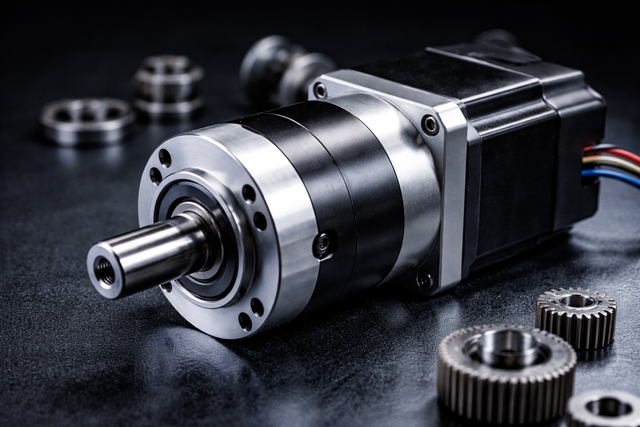
In simple terms, a stepper motor planetary gearbox is a mechanism that combines a stepper motor with a planetary gear system. The goal of this combination is to increase torque, improve positioning accuracy, and reduce the speed of the motor output. Stepper motors are already well known for their ability to move in precise steps, but when paired with a planetary gearbox, their efficiency and strength increase significantly. This makes them extremely valuable in industries where controlled movement matters.
Before diving deeper into the gearbox, it helps to understand the role of a stepper motor itself. A stepper motor is an electric motor that rotates in discrete steps rather than spinning continuously like a standard DC motor. Each electrical pulse sent to the motor causes it to rotate a fixed angle. This ability allows machines to control motion with remarkable precision. Because of this feature, stepper motors are widely used in robotics, printers, CNC machines, medical equipment, and automation systems.
However, stepper motors have certain limitations. They typically produce moderate torque, and in some applications that simply isn’t enough. Machines that need higher torque or lower speed often require a mechanical system to adjust the motor’s output. This is where the planetary gearbox enters the picture. By connecting the motor to a specialized gear system, engineers can multiply torque and reduce rotational speed while maintaining the stepper motor’s precision.
A Stepper Motor Planetary Reducer is essentially a planetary gear system attached to a stepper motor to reduce output speed and increase torque. This configuration allows machines to perform tasks that require strong and controlled motion. The reducer works by distributing mechanical load across multiple gears, ensuring smooth operation and improved durability. As a result, it becomes an ideal solution for equipment that needs reliable performance under demanding conditions.
Understanding the Planetary Gearbox
To understand how a stepper motor planetary gearbox works, it’s important to look at the design of the planetary gear system itself. The name “planetary” comes from the way the gears move, which resembles the motion of planets orbiting around the sun.
A typical planetary gearbox consists of three main components:
- Sun Gear – The central gear connected to the motor shaft.
- Planet Gears – Multiple gears that revolve around the sun gear.
- Ring Gear – The outer gear that surrounds the planet gears.
These parts work together in a compact yet highly efficient configuration. The sun gear drives the planet gears, which rotate inside the ring gear. Because several gears share the load simultaneously, planetary gearboxes are known for their high torque capacity and durability.
Another important component is the planet carrier, which holds the planet gears in place. As the gears rotate, the carrier transfers the mechanical output to the system. This structure allows the gearbox to maintain balanced load distribution, reducing wear and improving efficiency.
How the Stepper Motor Planetary Gearbox Works
When a stepper motor is connected to a planetary gearbox, the motor shaft directly drives the sun gear. Each pulse sent to the motor causes the sun gear to rotate slightly. As the sun gear moves, it drives the surrounding planet gears.
The planet gears then rotate along the inner surface of the ring gear. Because multiple gears are involved, the movement becomes smoother and more stable. The planet carrier collects this motion and delivers it as the final output shaft rotation.
Here’s where the real advantage appears. The gearbox is designed with a gear ratio, which determines how much the motor speed is reduced and how much torque is increased. For example, if a gearbox has a 10:1 ratio, the output shaft rotates one time for every ten rotations of the motor. At the same time, the torque increases approximately ten times (minus small efficiency losses).
This means a small stepper motor can suddenly power heavier loads with much greater precision.
Key Advantages of Stepper Motor Planetary Gearboxes
The combination of a stepper motor and planetary gearbox offers several important benefits.
1. Increased Torque
One of the most significant advantages is torque multiplication. Machines that require strong rotational force can benefit from the gearbox’s ability to increase torque without needing a larger motor.
2. Improved Precision
Stepper motors already provide excellent positioning control, but the gearbox further refines that precision. By reducing the output speed, the system allows smaller and more controlled movements.
3. Compact Design
Planetary gear systems are known for their compact structure. Unlike other gear mechanisms, they deliver high power density in a small space. This makes them ideal for equipment where space is limited.
4. Smooth Operation
Because multiple gears share the load, planetary gearboxes produce smoother motion and less vibration. This improves machine reliability and reduces wear on components.
5. Higher Efficiency
Compared to traditional gear systems, planetary gearboxes often achieve higher efficiency levels. This means less energy is wasted during operation.
Common Applications of Stepper Motor Planetary Gearboxes
Stepper motor planetary gearboxes are used across many industries. Their ability to combine precision, torque, and compact design makes them suitable for a wide range of applications.
Robotics
Robotic systems require extremely precise movements. Whether it’s a robotic arm assembling components or a collaborative robot working with humans, accurate positioning is essential. Planetary gearboxes help robots handle heavier loads while maintaining precision.
CNC Machines
CNC machines rely on exact motion control to cut materials accurately. Stepper motors combined with planetary gearboxes allow these machines to move cutting tools with consistent accuracy and force.
3D Printers
In 3D printing, small movements determine the quality of the final product. A gearbox can improve control over extrusion mechanisms and movement systems.
Medical Equipment
Many medical devices require quiet and precise motion. Stepper motor planetary gearboxes are often used in laboratory automation systems, imaging equipment, and surgical devices.
Packaging Machinery
Packaging machines operate continuously and require reliable motion control. Gear-reduced stepper motors help manage conveyor belts, labeling systems, and filling mechanisms.
Gear Ratios and Performance
One of the most important aspects of a planetary gearbox is its gear ratio. The ratio determines how much the speed is reduced and how much torque is increased.
Common ratios include:
- 3:1
- 5:1
- 10:1
- 20:1
- 50:1
- 100:1
A lower ratio provides higher speed but less torque multiplication. A higher ratio provides greater torque but slower output speed. Engineers choose the ratio depending on the specific requirements of the application.
Selecting the right ratio is crucial. If the ratio is too low, the system may not provide enough torque. If it’s too high, the machine may move too slowly.
Efficiency and Load Distribution
One reason planetary gearboxes are so popular is their balanced load distribution. Instead of a single gear handling the entire load, multiple planet gears share the force. This reduces stress on individual components and extends the lifespan of the gearbox.
Additionally, the symmetrical design ensures better alignment and smoother operation. Even under heavy loads, the system maintains stable performance.
Efficiency levels for planetary gearboxes often range from 90% to 97%, depending on the design and quality of materials used.
Materials and Construction
The durability of a stepper motor planetary gearbox depends heavily on the materials used in its construction. High-quality gearboxes typically use hardened steel gears, precision bearings, and robust housings.
Common materials include:
- Alloy steel gears for strength
- Aluminum or steel housings for structural support
- Precision ball bearings for smooth rotation
- Heat-treated components for durability
Manufacturers also use advanced machining techniques to ensure accurate gear alignment and minimal backlash.
Understanding Backlash
Backlash refers to the small gap between gear teeth during motion reversal. While some backlash is unavoidable in gear systems, excessive backlash can reduce positioning accuracy.
High-quality planetary gearboxes are designed to minimize backlash through precision engineering. Low-backlash gearboxes are especially important in applications like robotics and CNC machining, where even tiny inaccuracies can affect performance.
Maintenance and Longevity
Stepper motor planetary gearboxes are generally low-maintenance devices, but proper care can extend their lifespan significantly.
Basic maintenance tips include:
- Ensuring proper lubrication
- Avoiding overload conditions
- Keeping the gearbox clean and free from contaminants
- Monitoring temperature during operation
With proper maintenance, these gearboxes can operate reliably for thousands of hours.
Choosing the Right Stepper Motor Planetary Gearbox
Selecting the right gearbox involves considering several factors.
First, determine the required torque and speed for your application. This helps identify the appropriate gear ratio.
Second, consider the size and mounting configuration. The gearbox must match the stepper motor and fit within the machine design.
Third, evaluate backlash tolerance. Precision applications require low-backlash gearboxes.
Finally, consider build quality and manufacturer reputation. High-quality gearboxes may cost more initially but often provide better performance and longevity.
Future of Stepper Motor Planetary Gear Systems
As automation continues to expand, the demand for precise and reliable motion control systems will only grow. Industries like robotics, manufacturing, and medical technology increasingly rely on compact, high-performance motors and gear systems.
Advances in materials, manufacturing processes, and control electronics are also improving gearbox performance. Modern designs focus on reducing noise, increasing efficiency, and minimizing backlash even further.
Integration with smart sensors and advanced control systems may soon allow gearboxes to monitor their own condition, predicting maintenance needs before failures occur.
Conclusion
A stepper motor planetary gearbox is a powerful mechanical solution that enhances the capabilities of stepper motors. By combining precise motor control with a high-efficiency planetary gear system, this device delivers increased torque, reduced speed, and improved accuracy.
From robotics and CNC machines to medical devices and industrial automation, these gear systems play a critical role in modern technology. Their compact design, reliability, and performance make them an essential component in countless applications.
Understanding how they work — from the sun gear and planet gears to torque multiplication and load distribution — reveals why planetary gearboxes are widely trusted in engineering and automation. As technology evolves, the importance of these systems will likely continue to grow, supporting the machines that power our modern world.
About Post Author
