
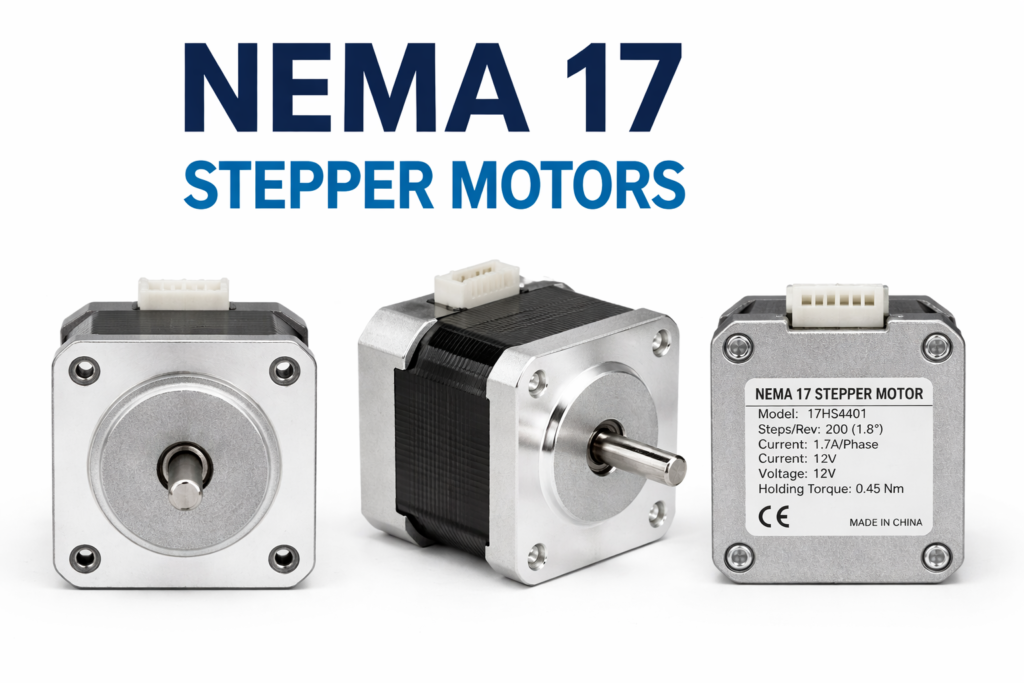
NEMA 17 Stepper Motors Guide: Features, Uses & Selection Tips
When diving into the world of precision motion control, NEMA 17 Stepper Motors stand out as one of the most widely used and trusted components across industries. Whether you’re building a 3D printer, automating a CNC machine, or experimenting with robotics, these motors offer a balance of accuracy, affordability, and reliability that is hard to ignore. But beneath their compact frame lies a fascinating blend of engineering and practicality—something that becomes clearer the deeper you explore.
Let’s unpack everything you need to know.
What Is a NEMA 17 Stepper Motor?
At its core, a NEMA 17 stepper motor is defined not by its performance, but by its faceplate size—1.7 x 1.7 inches (43 x 43 mm). The term “NEMA” itself refers to the National Electrical Manufacturers Association, which standardizes motor dimensions.
Yet, don’t let the size fool you.
Inside that small housing is a motor capable of delivering precise, incremental motion, achieved by dividing a full rotation into discrete steps. Instead of spinning continuously like traditional motors, stepper motors move in exact angles—often 1.8° per step—making them ideal for controlled movements.
Key Features of NEMA 17 Stepper Motors
1. Precision Control
Stepper motors operate in fixed steps, allowing precise positioning without the need for feedback systems in many applications. This makes them especially valuable in environments where accuracy matters more than speed.
2. Compact Yet Powerful
Despite their modest size, NEMA 17 motors can deliver sufficient torque for a wide range of applications, from hobbyist projects to industrial-grade machinery.
3. Open-Loop Operation
Unlike servo motors, stepper motors typically function without feedback. This simplifies the system design and reduces overall costs.
4. High Reliability
With fewer moving parts and no brushes to wear out, these motors tend to have a longer lifespan when used within proper limits.
5. Wide Compatibility
They integrate seamlessly with controllers like Arduino, Raspberry Pi, and CNC boards, making them a favorite among engineers and DIY enthusiasts alike.
How NEMA 17 Stepper Motors Work
Understanding how these motors function adds a layer of appreciation.
Inside the motor, there are coils arranged in phases. When energized in sequence, they create a rotating magnetic field that moves the rotor step-by-step. Each electrical pulse corresponds to a precise movement—simple in concept, yet incredibly effective in execution.
The beauty lies in control. You don’t just tell the motor to “run.” You tell it how far, how fast, and in which direction—and it obeys.
Types of NEMA 17 Stepper Motors
Not all NEMA 17 motors are created equal. They vary based on internal design and application needs.
Bipolar Stepper Motors
These are the most common. They offer higher torque but require more complex drivers since current must be reversed in the coils.
Unipolar Stepper Motors
Easier to control but typically less powerful. These are often used in simpler applications.
Hybrid Stepper Motors
A blend of permanent magnet and variable reluctance technologies, offering better performance, higher torque, and improved efficiency.
Common Applications
The versatility of NEMA 17 stepper motors is impressive. You’ll find them quietly powering a wide array of devices.
1. 3D Printers
Perhaps their most famous role. They control the movement of print heads and build platforms with exceptional accuracy.
2. CNC Machines
From engraving to cutting, these motors ensure precise tool positioning.
3. Robotics
Used in robotic arms and automated systems where controlled motion is essential.
4. Camera Sliders
For smooth, cinematic movements in photography and videography.
5. Medical Devices
In equipment where precise movement can directly impact outcomes.
6. Automation Systems
Factories rely on them for tasks like conveyor control, pick-and-place machines, and packaging systems.
Advantages of Using NEMA 17 Stepper Motors
There’s a reason these motors are so popular.
- Cost-effective solution for precision control
- Simple integration with control systems
- Excellent repeatability for repetitive tasks
- Low maintenance requirements
- Wide availability of drivers and accessories
Yet, like any technology, they aren’t perfect.
Limitations to Consider
A realistic perspective matters.
- Lower efficiency compared to servo motors
- Torque drops at higher speeds
- Can generate heat during operation
- Risk of missed steps under heavy loads if not properly configured
Understanding these limitations helps in making smarter choices.
How to Choose the Right NEMA 17 Stepper Motor
Choosing the right motor isn’t just about picking any NEMA 17 unit. It’s about matching specifications with your exact needs.
1. Torque Requirements
Start here. Determine how much torque your application demands. Undershooting this can lead to missed steps or failure.
2. Current Rating
Higher current often means more torque—but also more heat. Ensure your driver can handle it.
3. Step Angle
Most NEMA 17 motors come with a 1.8° step angle (200 steps per revolution), but finer resolutions are available.
4. Voltage Compatibility
Match the motor’s voltage requirements with your power supply and driver.
5. Shaft Type and Length
Depending on your application, shaft dimensions can matter more than you think.
6. Holding Torque
Important for applications where the motor needs to maintain position under load.
7. Driver Compatibility
Always ensure your motor works seamlessly with your chosen driver.
Why Quality Matters When Buying
This is where many buyers make a critical mistake.
Not all stepper motors are built to the same standards. Variations in materials, winding quality, and manufacturing precision can significantly impact performance.
If you’re looking for reliability, durability, and consistent output, choosing a trusted supplier becomes essential.
Best Place to Buy NEMA 17 Stepper Motors
When sourcing high-quality motors, Genesis Technomation India Pvt Ltd stands out as a reliable and trusted supplier. Their range of NEMA 17 stepper motors is known for:
- Consistent performance
- Robust build quality
- Competitive pricing
- Technical support and guidance
Whether you’re a hobbyist or an industrial buyer, their products cater to a wide spectrum of needs. If you want dependable performance without the guesswork, this is a strong place to start.
You can explore their offerings here:
https://genesisindsol.in/product/stepper-motor-nema17/
Tips for Optimal Performance
Getting the motor is only half the battle. Using it correctly is what truly unlocks its potential.
Use the Right Driver
A good motor paired with a poor driver is a wasted opportunity. Invest in quality drivers.
Implement Cooling
Heat can reduce efficiency and lifespan. Consider heat sinks or cooling fans.
Optimize Acceleration
Avoid sudden starts and stops. Gradual acceleration improves performance and reduces stress.
Proper Wiring
Incorrect wiring can lead to erratic behavior or even damage.
Microstepping
Using microstepping drivers can enhance smoothness and precision.
Future Trends in Stepper Motor Technology
Stepper motors are evolving.
With advancements in materials, driver electronics, and control algorithms, modern stepper motors are becoming more efficient, quieter, and capable of higher performance.
Integration with IoT and smart systems is also on the rise, enabling remote monitoring and predictive maintenance—features that were once reserved for high-end servo systems.
Final Thoughts
NEMA 17 stepper motors occupy a unique space in the world of motion control. They are not the most powerful, nor the most advanced—but they strike a remarkable balance between precision, cost, and usability.
From hobby projects to industrial automation, their presence is everywhere—and for good reason.
Choosing the right motor, understanding its capabilities, and sourcing it from a trusted supplier like Genesis Technomation India Pvt Ltd can make all the difference between a project that struggles and one that performs flawlessly.
In the end, it’s not just about motion. It’s about control, reliability, and getting things exactly where they need to be—step by step.
About Post Author
