
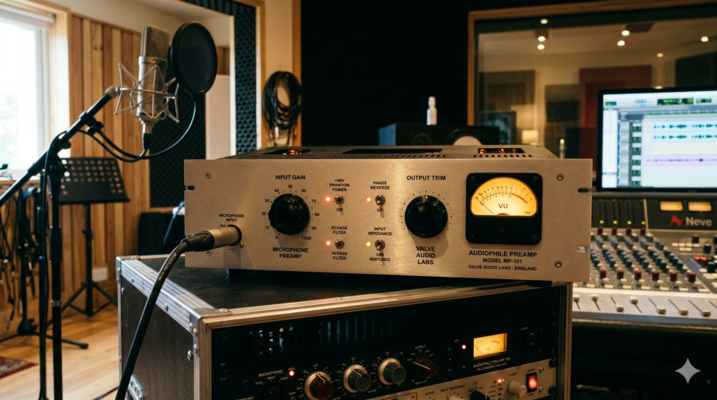
What Are Microphone Preamps? Benefits, Types, and Buying Guide
If you’ve ever recorded audio—whether it’s a podcast, a song, a voiceover, or even a simple video—you’ve already brushed against the concept of microphone preamps, even if you didn’t realize it. They sit quietly behind the scenes, often overlooked, yet they play a decisive role in how your sound ultimately turns out. Clean, warm, punchy, rich, or thin and lifeless—the difference often comes down to the preamp.
At its core, a microphone preamp (or “mic pre”) is responsible for taking a very low-level signal generated by a microphone and boosting it to a usable level, typically referred to as “line level.” That sounds simple. But the reality? Not all amplification is created equal. The way that signal is boosted—how much noise is introduced, how much coloration is added, how faithfully it preserves detail—can dramatically shape your audio.
Think of it this way: your microphone captures sound, but your preamp defines how that sound is presented. It’s the bridge between capture and clarity. And depending on the kind of bridge you use, the journey can be smooth, vibrant, or distorted.
How Microphone Preamps Actually Work
Microphones, especially dynamic and ribbon mics, output extremely weak electrical signals. We’re talking millivolts—far too low to be processed properly by mixers, audio interfaces, or recording devices. This is where the preamp steps in.
A mic preamp boosts this signal—sometimes by 30 to 70 decibels—while ideally maintaining signal integrity. That means increasing volume without adding unwanted noise, distortion, or coloration (unless you want coloration, which many engineers actually do).
But here’s where things get interesting. The “how” matters just as much as the “what.” Different circuits, components, and designs influence the sound in subtle (and sometimes not-so-subtle) ways. Some preamps aim for absolute transparency. Others intentionally add warmth, grit, or character.
And that’s why preamps are more than just technical tools—they’re creative ones.
Why Microphone Preamps Matter More Than You Think
It’s easy to assume your microphone does most of the heavy lifting. After all, it’s the piece you speak or sing into. But without a good preamp, even the most expensive microphone can underperform.
A weak or low-quality preamp might introduce hiss, muddiness, or harshness. It might flatten dynamics or fail to capture subtle nuances. On the flip side, a well-designed preamp can bring depth, clarity, and presence to your recordings.
Imagine recording a vocal track. With a poor preamp, the voice may sound distant, thin, or noisy. Switch to a high-quality preamp, and suddenly, there’s body. Air. Detail. It feels alive.
That transformation isn’t magic—it’s engineering.
The Role of Preamps in Different Audio Setups
Microphone preamps show up in more places than you might expect. They’re not always standalone boxes sitting in a rack.
Many audio interfaces have built-in preamps. Mixers include them. Even portable recorders come equipped with basic preamp circuits. However, built-in doesn’t always mean high-quality.
Professional studios often use dedicated external preamps for better control and superior sound. Home studio owners, podcasters, and content creators are increasingly doing the same as audio quality becomes more important across platforms.
If you’re serious about sound—really serious—eventually you’ll consider upgrading. And that’s where the decision to Buy Microphone Preamps comes into play, especially if you’re chasing a more refined, professional tone.
Key Benefits of Using Microphone Preamps
1. Clean Signal Amplification
The primary job, yes—but a good preamp does it without introducing noise. Clean gain is essential for clarity, especially in vocals and acoustic recordings.
2. Enhanced Sound Quality
Better preamps preserve the natural tone of your microphone while adding depth and richness. You hear more detail. More texture.
3. Greater Control Over Tone
Some preamps allow you to shape your sound—adding warmth, brightness, or subtle saturation. This becomes especially useful in music production.
4. Improved Dynamic Range
High-quality preamps capture both quiet and loud signals effectively, maintaining balance without distortion or loss.
5. Reduced Noise and Interference
Cheap amplification often introduces hiss or hum. Good preamps are designed to minimize these issues, resulting in cleaner recordings.
6. Versatility Across Applications
Whether you’re recording vocals, instruments, podcasts, or voiceovers, a reliable preamp adapts and performs consistently.
Types of Microphone Preamps
Not all preamps are built the same. In fact, their design philosophies vary widely. Let’s break down the main types.
Solid-State Preamps
These are known for their clean, transparent sound. They use transistors instead of vacuum tubes and are often preferred in modern digital recording environments.
- Pros: Low noise, reliable, accurate sound reproduction
- Cons: Can sound sterile or clinical to some ears
Solid-state preamps are ideal when you want to capture sound exactly as it is—no coloration, no added character.
Tube (Valve) Preamps
Tube preamps are loved for their warmth and musical coloration. They use vacuum tubes to amplify the signal, which naturally introduces harmonic distortion in a pleasing way.
- Pros: Warm, rich, vintage tone
- Cons: More expensive, can require maintenance
If you’ve ever heard a “warm” vocal track, there’s a good chance a tube preamp was involved.
Hybrid Preamps
These combine elements of both solid-state and tube designs, offering a balance between clarity and warmth.
- Pros: Versatile, flexible tone shaping
- Cons: Can be complex to dial in
Great for users who want the best of both worlds.
Transformer-Based Preamps
Some preamps use transformers to add subtle coloration and improve signal handling.
- Pros: Adds character, enhances low-end depth
- Cons: Can be more expensive
Often found in high-end studio gear, these are prized for their sonic “flavor.”
Channel Strip Preamps
These are all-in-one units that include a preamp along with EQ, compression, and sometimes de-essing.
- Pros: Complete recording solution
- Cons: Higher cost, more complex
Perfect for professionals who want full control over their signal chain.
Built-In vs External Preamps
This is one of the most common questions.
Built-in preamps (found in audio interfaces and mixers) are convenient and cost-effective. For beginners or casual users, they’re often sufficient.
External preamps, however, offer superior sound quality, more headroom, and better components. They’re designed specifically for performance, not just convenience.
If you’re aiming for professional-grade audio, external preamps are usually the better investment.
What to Look for When Buying a Microphone Preamp
Choosing the right preamp isn’t just about price or brand. It’s about matching the gear to your needs.
1. Gain Range
Make sure the preamp provides enough gain for your microphone, especially if you’re using dynamic or ribbon mics.
2. Noise Level (EIN Rating)
Equivalent Input Noise (EIN) tells you how much noise the preamp introduces. Lower is better.
3. Headroom
Good headroom ensures your signal won’t distort when levels peak.
4. Connectivity
Check for XLR inputs, line outputs, and compatibility with your existing setup.
5. Tone and Coloration
Do you want clean and transparent, or warm and colored? Your choice will shape your recordings.
6. Build Quality
A solid, well-built preamp lasts longer and performs more reliably.
7. Budget
There are excellent options at every price point—but know where to invest based on your goals.
Who Needs a Microphone Preamp?
You might be wondering—do you really need one?
- Podcasters: Yes, especially for clear voice recordings
- Musicians: Absolutely, for vocals and instruments
- YouTubers & Content Creators: Increasingly important for professional sound
- Voiceover Artists: Essential for clarity and presence
- Home Studio Owners: A worthwhile upgrade from built-in preamps
If audio quality matters in your work or hobby, a good preamp isn’t a luxury—it’s a necessity.
Common Mistakes to Avoid
Even experienced users sometimes overlook these:
- Ignoring gain staging – Too much gain can distort; too little adds noise
- Choosing based on price alone – Cheap doesn’t always mean good value
- Overlooking compatibility – Not all preamps work seamlessly with all setups
- Buying unnecessary features – Focus on what you actually need
- Neglecting room acoustics – Even the best preamp can’t fix a bad environment
Final Thoughts
Microphone preamps might not be the most glamorous piece of audio gear, but they are undeniably one of the most impactful. They shape your sound at a foundational level—long before mixing, mastering, or post-processing even begins.
Whether you’re chasing crystal-clear vocals, warm analog tones, or simply trying to eliminate background noise, the right preamp can elevate your recordings in ways that are immediately noticeable.
And perhaps that’s the real takeaway here: better sound doesn’t always come from more effort—it often comes from better tools.
Invest wisely, understand your needs, and choose a preamp that complements your creative vision. Once you do, you’ll start hearing your audio not just as sound—but as something crafted, refined, and unmistakably professional.
About Post Author
